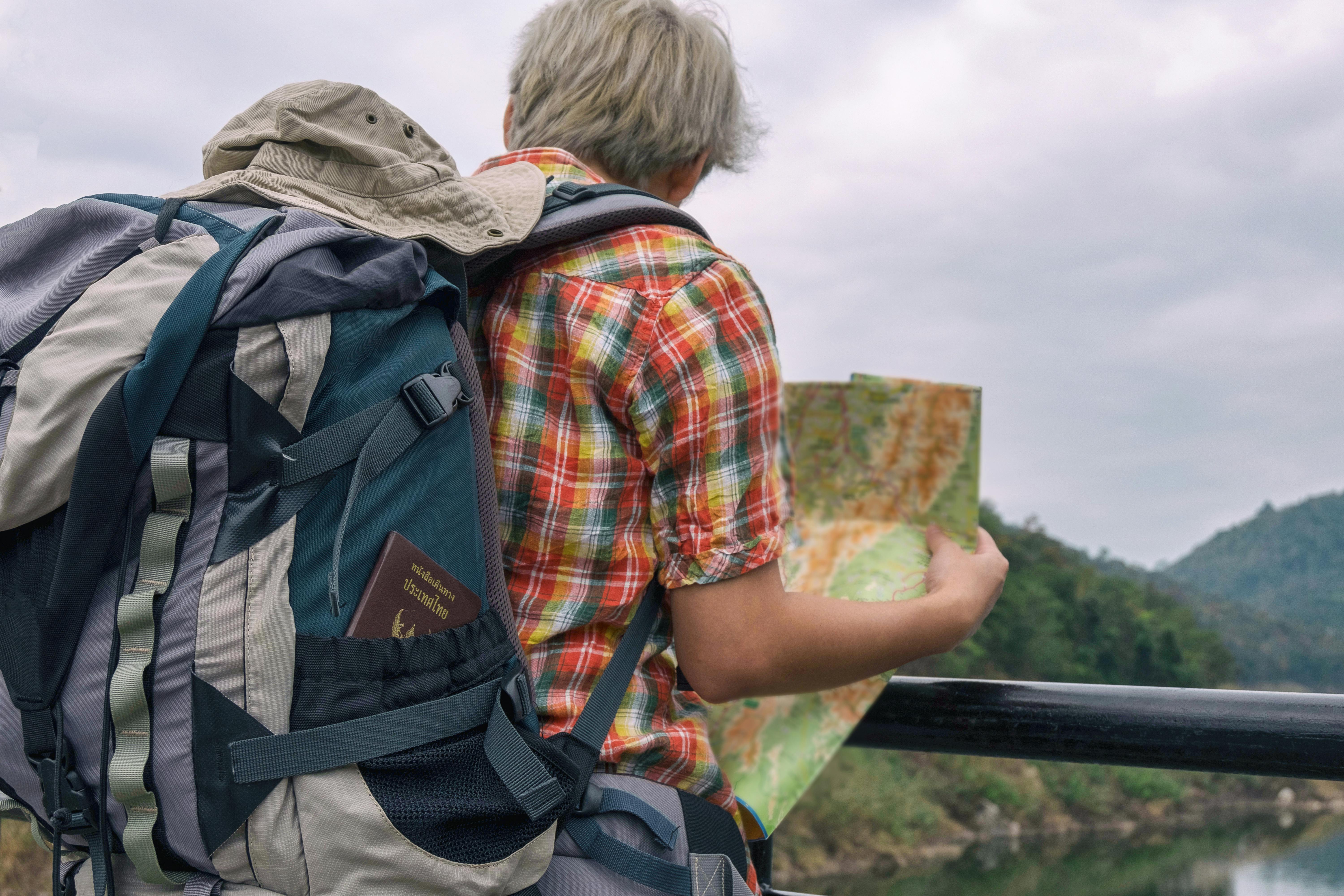
Tactical Travel Security: The Soloist’s Global Risk Management Manifesto
In the theater of global movement, the solo traveler occupies a position of asymmetric risk. Without the "biological redundancy" of a partner to monitor the perimeter, the individual is the sole point of failure. Modern travel security has evolved beyond the archaic advice of "watching your wallet"; it now demands a clinical, high-tier integration of Victimology Filtering, Kinetic Hardening, and Digital Sequestration.
For the SoloLife practitioner, global exploration is a laboratory for radical self-reliance. However, the pre-requisite for this freedom is a hardened security baseline. This manual deconstructs the 10 non-negotiable rules for first-time solo travelers, providing the technical protocols required to navigate high-volatility environments with the precision of a risk assessment professional. We will analyze the OODA Loop for situational mastery, the Digital Anchor for life-line integrity, and the Bartender Rule for intelligence gathering. This is not a guide for the fearful; it is a blueprint for the sovereign.
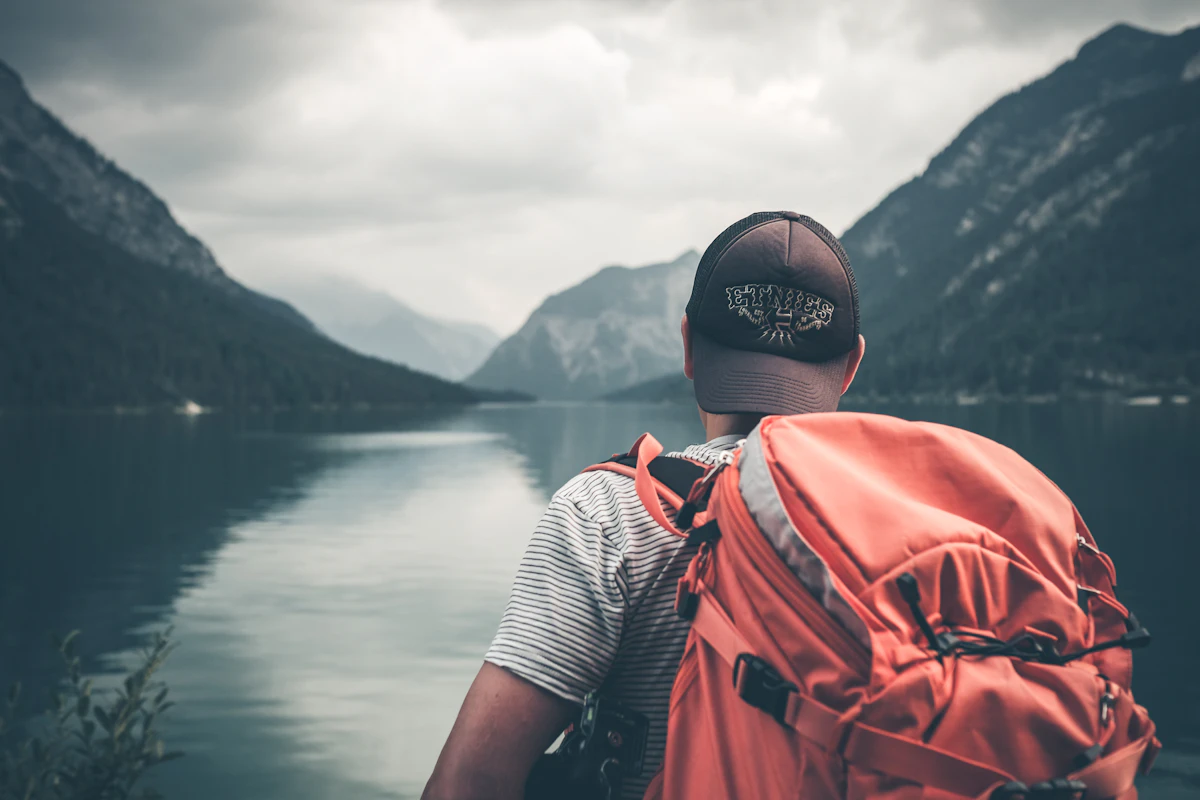
A high-performance solo traveler performing a baseline environmental scan in a foreign transit hub
1. The Victimology Filter: Projecting Low-Vulnerability Profiles
predators, whether petty opportunistic pickpockets or high-stakes social engineers, operate on a Selection Filter. They are searching for specific non-verbal indicators of "Soft Targets." To survive as a soloist, you must apply the Victimology Filter—the process of deliberately projecting a high-stakes, low-vulnerability kinetic profile.
The Science of Non-Verbal Dominance
Studies in criminal psychology, specifically those analyzing "The Grifter’s Gaze," show that targets are selected based on their "Environmental Integration." If you are looking at a digital map on a smartphone while walking, your Situational Awareness is effectively zero. You have entered "Condition White" (unaware and unprepared).
To project a "Hard Target" profile:
- Kinetic Cadence: Walk with a purposeful, rhythmic gait. Avoid the "tourist shuffle." Maintain a posture that suggests you are following a pre-calculated route.
- The 360-Degree Scan: Practice regular, subtle head movements to check your six. This signals to potential tails that you are monitoring the environment.
- Aesthetic Camouflage: Avoid high-visibility branding or jewelry that establishes a "Wealth Baseline." Your goal is to look like a high-net-worth resident, not a high-value victim.
By hardening your visual profile, you ensure that you never pass the predator's initial "Feasibility Test." You are not just being safe; you are engaging in Visual Deterrence. This mirrors the principles we discuss in the Solo Safety Audit for your home: make the cost of engagement higher than the potential reward.
2. The Digital Anchor Protocol: Engineering Life-Line Integrity
The romanticized notion of "disappearing" into a foreign culture is a catastrophic liability for the first-time soloist. In the absence of a physical partner, your safety depends on a Digital Anchor—a trusted, stationary individual back home who holds the "Master Key" to your logistical data.
Technical Redundancy
Your Digital Anchor should have access to a secure, encrypted folder (using tools like Bitwarden or Proton Drive) containing:
- Identity Metadata: High-res scans of your passport, visas, and medical records.
- Logistical Flow: A live, shared calendar of every hotel booking, flight number, and train departure.
- Financial Maps: The last four digits of your active cards and the contact numbers for your bank's fraud department.
The Dead-Man’s Switch
Implement a Check-In Frequency Protocol. A simple "Green Light" text every 12 hours is sufficient. If a check-in is missed by more than 4 hours, the Anchor triggers the Emergency Escalation Chain: contacting the local embassy, the hotel manager, and your travel insurance provider. By using automated location-sharing apps (like Google Maps "Share Location" or specialized GPS trackers), you ensure that your last known coordinate is always documented. This protocol allows you to enjoy the Science of Solitude while maintaining a tether to global assistance.

A close-up of a high-end smartphone displaying encrypted data and tracking maps
3. Situational Awareness & the OODA Loop: The Physics of Survival
In 1950, Colonel John Boyd developed the OODA Loop (Observe, Orient, Decide, Act) to train fighter pilots for high-stakes combat. For the solo traveler, the OODA loop is the primary cognitive tool for navigating transit hubs, crowded markets, and unfamiliar neighborhoods.
Breaking Down the Loop
- Observe: Constantly collect raw data. Where are the exits? Who is moving faster than the crowd? Who is stationary?
- Orient: Filter the data through your "Baseline." In a busy market in Marrakesh, noise is normal. A sudden silence or a group of people moving against the flow is an anomaly.
- Decide: formulate a plan. "If that individual follows me for one more block, I will enter that high-end hotel lobby."
- Act: Execute without hesitation.
The danger for the soloist is Cognitive Overload. We often stay in the "Observe" phase for too long because we are afraid of being "rude" or "overreacting." In travel security, there is no such thing as an overreaction—only Proactive Mitigation. Use the Digital Minimalism strategies to keep your ears free from headphones; your hearing is your primary early-warning system for environmental shifts.

A bustling, complex marketplace requiring high-intensity situational awareness and OODA processing
4. Financial Redundancy & Arbitrage: The 3-Tier Wallet System
Financial loss is a common travel friction, but for the soloist, Asset Freezing is a safety crisis. If your only card is swallowed by an ATM in a rural village, you lose your ability to "Buy your way out of trouble." You must apply Financial Arbitrage—distributing your capital across different physical and digital locations.
The Tactical Tiers
- Tier 1: The Decoy Wallet. Contains a small amount of local currency and one "burner" card (like a Revolut or Wise account with a low balance). This is what you hand over if you are confronted.
- Tier 2: The Primary Gear. Kept in a secure, internal pocket. This contains your main travel credit card and your primary ID.
- Tier 3: The Fortress. Stored in the hotel safe or a hidden "Stash Pouch" inside your luggage. This contains emergency cash ($200 USD minimum) and a secondary debit card.
Never carry all your assets in one bag. By creating these tiers, you ensure that a single theft or loss doesn't end your journey. For technical advice on managing these assets, refer to the U.S. Department of State’s financial safety guidelines↗.
5. Arrival Logistics: Engineering the "Landing Strip" Protocol
Statistics from OSAC (Overseas Security Advisory Council)↗ confirm that the first 60 minutes in a new country—the Golden Hour—are the window of maximal vulnerability. You are tired from transit, disoriented by a new language, and burdened with all your physical belongings.
The Landing Strip Strategy
To mitigate this, you must engineer your arrival before you leave home:
- Daylight Arrival Mandate: Never book a flight that lands after 4:00 PM. Seeing the layout of your destination in the sun is a psychological and tactical advantage.
- Pre-Paid Transport: Do not stand in the "Taxi Queue" haggling with drivers. Pre-book a verified transfer or use a ride-share app (Uber/Grab) where the driver’s ID and route are tracked by a third party.
- Offline Mapping: Download the local map on Google Maps. If your SIM card fails, you still have Navigational Sovereignty.
Your goal is to move from the "Tube" (the airplane/train) to the "Fortress" (the hotel) with zero stopping in "Unsecured Zones."
6. Accommodation Hardening: Creating a Secure Solo Sanctuary
Your hotel or rental is not just a place to sleep; it is your base of operations. Once inside, you must perform a Hardening Protocol to ensure the perimeter cannot be breached while you are in a vulnerable state (sleep).
Selection Criteria
- Floor-Level Arbitrage: Never accept a ground-floor room (easy entry) or a room above the 4th floor (beyond the reach of most fire department ladders).
- The Door Wedge: The most powerful security tool in your bag is a $5 rubber door wedge. Placing this under your door from the inside provides an analog mechanical block that no master key can bypass.
- Digital Privacy Check: Use a simple camera-detector app or perform a physical sweep of "Mirrored Surfaces" and "Electronic Hubs" to ensure your privacy is not compromised.
A hardened room allows for the deep, restorative sleep necessary for the Solo Morning Ritual, ensuring you are mentally sharp for the day’s exploration.
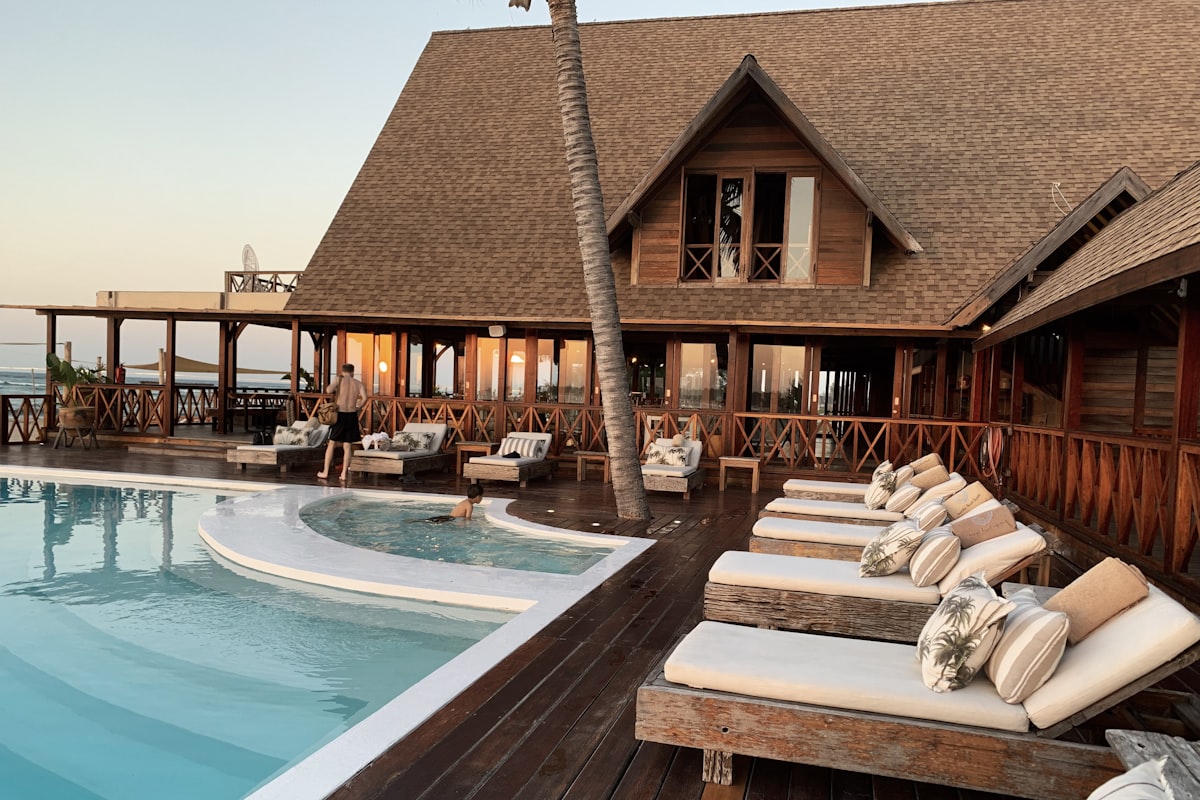
A high-end, hardened hotel room representing the ideal solo base of operations
7. The Bartender Rule: Information Extraction without Exposure
As a solo traveler, you will need information. However, asking a stranger on the street, "Where is the nearest ATM?" identifies you as lost and alone. Instead, use the Bartender Rule.
The Stationary Asset
Always seek information from "Stationary Assets"—people who are working in a fixed location (bartenders, hotel receptionists, bookstore owners). They have a professional reputation to maintain and are less likely to be involved in opportunistic grifts.
Conversational Camouflage
When speaking to anyone, use The "We" Pronoun.
- "We are looking for a good dinner spot."
- "My friend is waiting for me back at the hotel."
Even if you are 100% alone, projecting the existence of a "Partner" or "Group" creates a psychological barrier for predators. It suggests that if you go missing, someone will notice within minutes.
8. Transport Sovereignty: Managing the "Last Mile" Risk
Transportation is the primary cause of injury and logistical compromise in solo travel. To maintain Transport Sovereignty, you must control the variables of your movement.
Ride-Share Protocols
- Verification: Always verify the license plate and ask the driver, "Who are you picking up?" Never say your name first.
- Live Tracking: Share your "Live Ride" with your Digital Anchor.
- The "Exit Path": Sit behind the driver’s seat. It makes it harder for them to reach you and provides you with the best angle to exit the vehicle from either side.
Train & Bus Logistics
In overnight transit, use a high-quality cable lock to anchor your bag to the seat frame. Your bag is an extension of your life; if it moves, you move.
9. Emergency Infrastructure: Pre-Mapping the Trauma Net
Before your wheels touch the ground, you must know where the Trauma Centers and Consulates are located. In a crisis, your OODA loop will be compromised by adrenaline; you cannot rely on a Google search in the middle of a medical emergency.
The Extraction Map
Mark these three locations on your offline map:
- Level-One Trauma Center: Not just any clinic, but the highest-tier hospital in the city.
- National Embassy: Your primary point for political or legal extraction.
- The "Safety Hub": A large, 5-star international hotel. Even if you aren't staying there, these locations have 24-hour security, English-speaking staff, and reliable communications.
Consider purchasing Medical Evacuation Insurance (like World Nomads↗). For a soloist, having a "Global Rescue" team on speed-dial is the ultimate insurance for your independence.
10. The Sovereign Mindset: Fear as a Functional Asset
The final rule of solo travel security is the cultivation of the Sovereign Mindset. Fear is not an emotion to be suppressed; it is Biological Data to be processed.
Integrating Intuition
In the intelligence community, we call this "The Gift of Fear." If your gut tells you a street is "wrong" or a person is "suspicious," do not look for a logical reason to justify it. Act on the signal immediately. By living a SoloLife, you are training your brain to trust its own sensors without the interference of social consensus.
Solitude is your greatest productivity tool, and safety is the armor that protects that tool. When you master these rules, you aren't just "staying safe"; you are claiming your right to explore the planet on your own terms.
The world is vast, but with a hardened protocol, you are vaster. Go forth. Live sovereign.
The Spiderweb:
- *Secure your home before you leave using the Solo Safety Audit.*
- *Reclaim your cognitive bandwidth for exploration via Digital Minimalism.*
- *Master the mental state of the lone hunter in The Science of Solitude.*